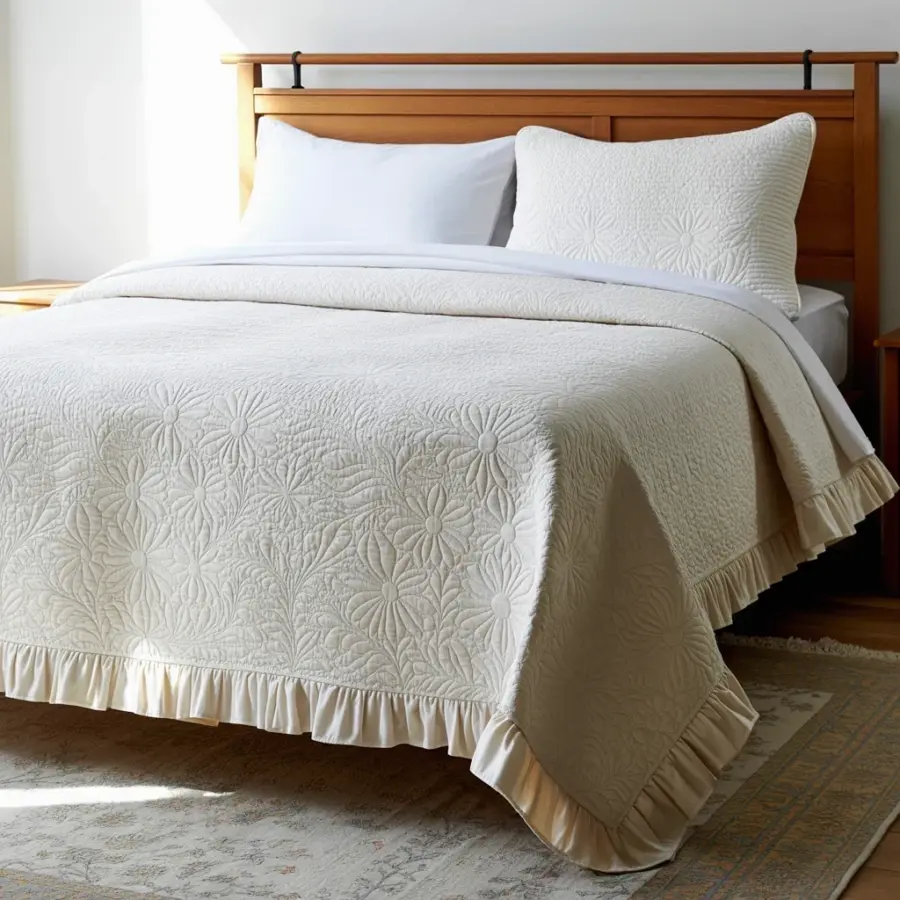
You’ve got the white quilted bedspread with the floral damask pattern finally laid out on your bed, and something isn’t right. The photos showed this soft, heirloom look with the raised cream motifs and the ruffled edge spilling over the mattress. But right now it just sits there, flat and a little stiff, like a sheet that got lost on its way to becoming a blanket. I’ve been there. That moment when you wonder if you should have just bought a plain duvet and called it a day.
Here’s the thing though: the bedspread isn’t the problem. Most of the time, it’s the mistakes we make around it, little things about sizing, layering, and what’s underneath that turn a gorgeous quilt into a forgettable slab of white. These are the common traps, and honestly, they’re easy to avoid once you know what to look for.
Mistake #1: Treating It Like a Winter-Only Layering Piece
The first instinct is to shove the quilted bedspread into a closet when spring rolls around and drag it back out when the temperature drops. That’s a waste. This is exactly the kind of bedding that shines in warmer months. A white quilted bedspread for summer works because the quilting is light enough to use on its own, no duvet, no heavy comforter, just the bedspread over a sheet.
I use mine as a throw blanket alternative throughout June and July. It drapes over the foot of the bed, adds that raised floral texture, and if the night gets cool, I pull it up and it’s enough. You don’t need a thick layer to make a statement. The damask pattern does the heavy lifting.
Mistake #2: Ignoring the Ruffled Border When You’re Choosing a Size
Look, the ruffled edge is not just a decorative afterthought. That border takes up real space, and if you’re buying the same size you’d buy for a fitted sheet, you’re going to get a bedspread that barely clears the mattress. Measure for the drop you actually want. A queen mattress with a deep box spring will swallow a standard queen quilted bedspread with a ruffled border if you’re not careful.
You want that ruffle to rest softly against your bed frame, maybe even skim the floor if you’re going for a romantic, traditional bedroom styling vibe. That means going up a size sometimes. I have a queen bed and I’ve bought full or even king bedspreads before just to get the drape right. Nobody talks about this enough.
Mistake #3: Smothering the Floral Damask Pattern With Too Many Pillows
Ok so you’ve arranged the bed like a hotel showroom, nine pillows in three different sizes, all in solid white or cream. And now the beautiful floral damask motif is completely hidden. The whole point of a quilted bedspread with a raised pattern is that texture. You can’t feel it through a mountain of shams.
Pull back on the pillow count. Two sleeping pillows in that matching white pillowcase with the same quilted pattern, one lumbar in a contrasting muted blue or beige, and you’re done. Let the bedspread be the star. That ruffled border and those cream floral motifs need room to breathe. If you bury them, you might as well have bought a plain white blanket.
Mistake #4: Pairing It With a Headboard That Fights the Aesthetic
The bed in the photo that made you fall in love with this bedspread has that warm honey oak headboard with the simple horizontal metal bar across the top. That’s not an accident. That specific wood tone works because it’s warm but not orangey, and the metal bar adds a slight modern edge that keeps the whole thing from tipping into grandma’s guest room.
If you have a dark, heavy headboard or something with a lot of carved detail, the white quilted bedspread can feel disjointed. You don’t have to replace your furniture, but you should acknowledge the contrast. A light, airy bedspread needs the wood around it to either match that cozy warmth or provide a clean, simple line. Honey oak is perfect. A stark white headboard can work too, but you’ll want to add a touch of warmth somewhere else, maybe through the area rug or a throw blanket.
Mistake #5: Layering It Flat and Calling It Done
Here’s the mistake I see everywhere: someone lays the quilted bedspread perfectly smooth, tucks the sides in military style, and then steps back to admire a bed that looks like a pancake. A bedspread with this much texture needs a little mess. It needs folds and drape to show off that raised quilting.
Instead, let the bedspread hang slightly off one side. Fold the top edge down just a few inches so that the pattern catches the light at an angle. When you make the bed, don’t tug it taut. Just smooth it enough to look intentional. The ruffled border will do the rest. Honestly, that little bit of softness is what makes the whole room feel cozy instead of staged.
Mistake #6: Using Harsh Detergent on the Raised Quilting
I ruined a good quilted bedspread once by bleaching it on a stubborn stain. It came out clean, sure, but the fabric felt thin and the raised floral motifs flattened out in a way that never came back. The texture is what makes this bedding special, and aggressive chemicals will destroy it faster than anything else.
Use a gentle, phosphate-free detergent. Wash on a delicate cycle with cold water, and if you must dry it, use the lowest heat setting and pull it out while it’s still slightly damp. Hang it or lay it flat for the last bit. And here’s a practical list that saves you money and frustration:
- Spot clean stains immediately with a little water and mild soap instead of pre-treating the whole spread.
- Wash it less often than you think you need to, every few weeks is usually fine unless you have pets or kids.
- Iron? No. That will flatten the damask pattern. If the wrinkles bother you, steam it from a distance.
That raised texture is the whole reason you chose a white quilted bedspread over a smooth matelassé or a simple coverlet. Treat it like the heirloom it’s pretending to be.
One More Thing About the Rug Underneath
The photo that inspired this article shows the bed sitting on a patterned area rug with muted beige and blue tones. That’s not a coincidence. When your bedspread is pure white and your headboard is warm wood, the rug is the bridge that connects the two. If your flooring is stark or too busy, the bed can feel like it’s floating in a weird visual void.
You don’t need to rush out and buy a new rug. But if you’re struggling to make the quilted bedspread look at home, consider what’s happening beneath your feet. A soft blue-beige or even a muted gray rug grounds the whole scene. It lets the white bedding glow without shouting, and that’s exactly the kind of effortless traditional bedroom styling everyone’s chasing.
Stop Overthinking the Perfect Bed
At the end of the day, a white quilted bedspread with a floral damask pattern and ruffled border is supposed to make your bedroom feel lived-in and welcoming. Not perfect. Not sterile. Just warm, with a little memory of someone pressing the fabric down with their hand and admiring the pattern.
So go ahead, toss the bedspread on, let it wrinkle in all the right places, and don’t apologize for the honey oak headboard you refused to paint. Style it your way, wash it gently, and enjoy the fact that you chose something with texture and charm instead of another plain white duvet. If you want to share your own mistakes or layering tips, I’m all ears. There’s always more to learn when it comes to getting that quilted look just right.
Leave a Comment